
The Dimensions of al-Nakba (the Catastrophe)
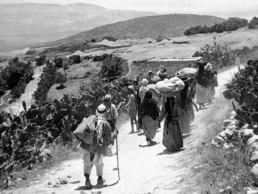
Any discussion of this issue must begin by establishing what was actually involved in al-Nakba, the catastrophe in which the Palestinians were originally expelled. Between 1920 and 1948, the number of Jews in Palestine rose from 61,000 to 604,000, of which only 150,000 were born in Palestine. The rest were immigrants, mostly of military age; some were veterans of the Second World War, having fought in the British army during the war. In 1948, the 1,441,000 Palestinian Arabs formed an absolute majority of the population.1 As a result of Israeli aggression in 1948, 805,000 Palestinians (84 per cent of the indigenous Arab inhabitants of Palestine) were expelled and the refugees lost homes, property and land in 532 localities.2 Thus, the refugee problem was born. By 1994, their numbers had grown to 4,476,000, 30 per cent of whom still live in the West Bank and Gaza and 53 per cent in neighbouring Arab countries. In total, 83 per cent of the refugees–and 88 per cent of all Palestinians–are still in Palestine, or live within 100 miles of its borders. The rest are located in the Gulf, Europe and the Americas.
Israel had taken control of a total of 20,325 square kilometres of land–or 78 per cent of Mandate Palestine: 1,682 square kilometres (8 per cent of present-day Israel) was land under Jewish control prior to the 1948 War; 1,465 square kilometres (7 per cent) was Palestinian land whose inhabitants stayed in Israel, and 17,178 square kilometres (85 per cent) was land which belonged to Palestinians who now became refugees.3 Thus, fully 92 per cent of contemporary Israel is made up of Palestinian land. Despite sustained attempts by the Israeli authorities to obfuscate the reality of this dispossession, recent analysis of Israeli archives, such as the excellent studies by Morris, Pappe, Flapan and Finkelstein, have confirmed the original claims of the refugees. Even while Palestine was still under the British Mandate, 213 localities (43 per cent of those eventually captured) were overrun and depopulated by Zionist forces. Between 15 May and 11 June 1948, the period in which Arab forces entered Palestine to prevent the Zionist takeover, we find that 291 localities (59 per cent) were depopulated. The Arab intervention not only failed to restore the refugees to their homes, but also failed to rescue the remaining one-third of the Palestinian population.
There is one other striking feature of this Palestinian exodus. A comparison of the depopulation date of each village captured with the dates of Israeli military operations shows that practically no exodus took place outside periods of hostilities, however brief the lull in the fighting. That, after all, would have been an ideal opportunity for the villagers to leave, since the threat to their lives and property would still have been present but sufficiently removed to make a safe departure possible, if that had been what they wanted. The fact is they did not leave. The correlation between their departure and Israeli assaults is compelling, demonstrating that, in every case, their departure had been forced on them by military action.
The impact of the massacres on this process of forced migration was considerable. The massacre in the village of Deir Yassin is an infamous example, but the massacre in Dawamiyya is the largest and most brutal. About 500 people were butchered by the units of the Israeli 89th Battalion (the 8th Brigade) on the afternoon of 29 October 1948. A total of 33 massacres have been reported during major Israeli operations between April and October 1948, and these were clearly used as military instruments to accelerate the exodus. Accounts of the expulsions have revealed that, when expelled, villagers moved to a nearby safe place or stayed with relatives, awaiting an opportunity to return. Many circulated around their villages, but those who were seen trying to return were shot on the spot as infiltrators. Soon after, their houses were destroyed and their harvest burnt to prevent their return. With the exception of those inhabitants of coastal towns who left by sea and those who were forced to march away, most refugees lingered around their villages, trying in vain to return before they ended up in a place of refuge.
In short, the claim that the refugees left their homes on the orders of Arab governments and not through Israeli expulsion and military assaults, has no basis.4 A corollary of this claim has been that the Arab governments, not Israel, are responsible for the refugees and that they must resettle them in their countries at their expense. This, equally, has no basis. Return therefore becomes a viable means of resolving the problem within the context of the current peace process in the Middle East, particularly since the original expulsions resulted from acts of war. Analysis of the archival material shows that 23 per cent of the evacuated villages had been depopulated due to expulsion by Jewish forces, 51 per cent by military assault, and 9 per cent by imminent attack. Eighty three per cent of the villages were depopulated as a result of Zionist military attacks. Psychological warfare was responsible for 9 per cent of the villages evacuated, while the population of 1 per cent of villages involved left of their own accord, and 7 per cent for unknown reasons.5 In effect, therefore, the depopulation of the refugees was the direct result of an all-out war against them.6
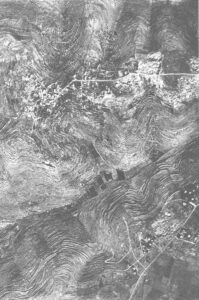
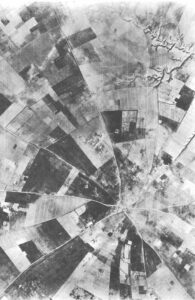
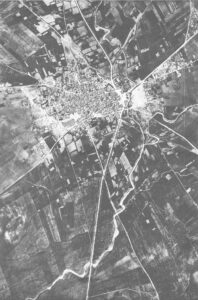
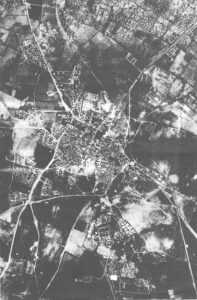
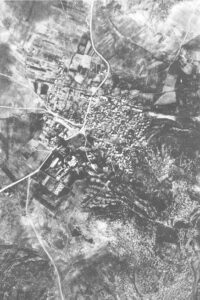
Any question of return, however, raises a series of genuine problems. One which deserves careful attention is the practical issue of identification: namely that today, villages have been destroyed and the associated land boundaries are unrecognisable.7 In fact, this is not the case and return to the sites from which they were expelled would be quite possible for the majority of refugees and their descendants, although, of course, extensive reconstruction would be necessary.8 With the exception of the central district of Israel, relatively few village sites are occupied by modern construction. Most kibbutzim buildings are installed away from old village sites. It is also claimed that land boundaries have disappeared and are impossible to determine today. In fact, detailed maps of Palestine and Israel, which are available, assisted by the modern technology used by Israel to lease the land of refugees, are quite sufficient to determine old and new boundaries. It can thus be demonstrated that all boundaries and ownerships have been well-recorded and can be identified.9 Indeed, not only are villages retained in the collective memory of refugees and their children, but their original images have been preserved for posterity through the British aerial survey of 1945-6.
Resettlement Schemes
Israel and its supporters have proposed many schemes to dispose of the refugee problem for ever. As Masalha10 has clearly demonstrated, the origin of the idea of resettlement is to be found in the Zionist policy of “transfer” (expulsion). After 1948, Zionist supporters in the West-Sybilla Thicknesse,11 for example–suggested the resettlement of refugees in Syria and Iraq (but not Lebanon), possibly with UNRWA as an instrument of resettlement. After 1967, pro-Israeli authors proposed a plethora of resettlement schemes. Don Peretz, who writes frequently on the subject, endorses solutions which allow a limited return of the refugees to a Palestinian entity, but not to their original homes. He also considers limited compensation for lost property to be offset against the unrelated and exaggerated claims of Jews who left Arab countries to settle on Palestinian land. Mark Heller also proposes resettlement elsewhere and a limited return (750,000 out of the eligible 2,700,000), again to a nominal state, not to their homes.
Zureik12 presented a comprehensive review of resettlement plans and other refugee issues. He describes in particular the semi-official proposal made by SWomo Gazit. Gazit insists on the fmality of the solution, the renunciation of the right of return, the dismantling of UNRWA and the abolition of the special status of refugees. As a reward, Gazit wants Israel to issue a moral-psychological acknowledgement recognising the suffering of the Palestinians over the past 50 years. To avoid admitting Israeli responsibility, this acknowledgement should form part of a UN resolution abolishing the Right of Return enshrined in Resolution-194, paragraph-11.
The Palestinian writer, Ahmed Khalidi,13 has picked up the thread by suggesting a trade-off between this formal acknowledgement and the admission by the Palestinians that the implementation of the right of return is impossible. However, his has been a lone voice amongst Palestinian refugees which has received no support whatsoever. Arzt,14 in a much publicised report, suggests the permanent dispersal of the Palestinians through their resettlement wherever they wish, except in their original homes. As a palliative, she also proposes that Palestinians maintain their link as a people by holding some kind of Palestinian identity papers, provided that they drop their claim to their land. In such an event, Israel would be able to retain their land legally.
As an act of generosity, Israel would, however, allow back 75,000 persons, after rigorous vetting and within a limited period. Translated into 1948 figures, this means 8,000 original refugees–a fraction of the 300,000 figure proposed by President Truman in 1949 as a price for admitting Israel into the UN. Finally, Israel was admitted to the UN following the promise made by Moshe Sharett, Israel’s representative in the UN, that it would allow the return of 100,000 persons–a promise he never fulfilled.
None of these schemes has had the slightest chance of being accepted by the Palestinians, and alternatives must therefore be found.
The Return Plan
An alternative proposal must counter the common argument that, in practice, Israel is now fully populated and return of the Palestinian refugees is no longer a practical possibility. The proposal outlined below is designed to demonstrate that this fear is unfounded and that the return of the refugees is possible with no appreciable dislocation of Jewish residents.
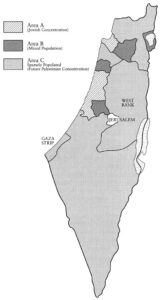
Israel is divided into 41 “natural regions”. [see Map-7.1]
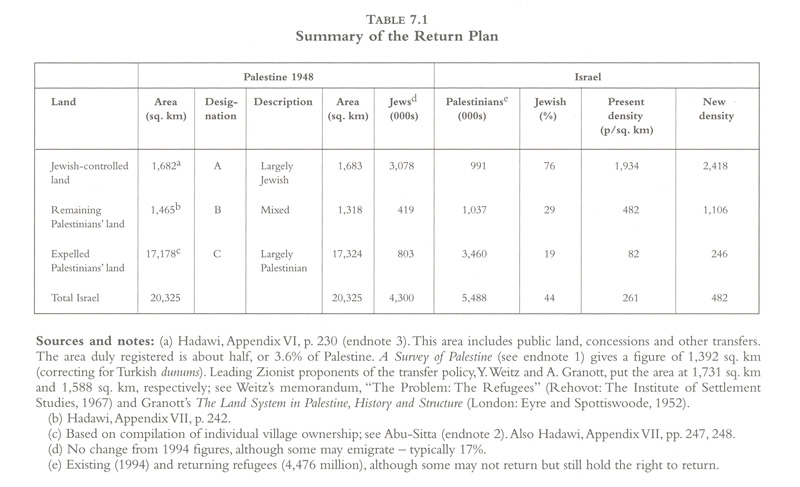
The first eight of these natural regions15 have an area of 1,683 square kilometres (8 per cent of Israel). This is where the majority of Israelis (2,924,000 or 68 per cent of the Jewish-Israeli population) live–Area A. It is remarkably similar in size, but not exactly in location, to the area in which Jews lived in pre-1948 Palestine. This population concentration emphasises the traditional pattern of Jewish life, in close proximity to one another and in pursuit of occupations such as commerce and industry. Fifty years of Israeli conquest and expansion have not convinced the majority of Israelis to abandon traditional habits.16 The next five natural regions17–Area B–have an area of 1,318 square kilometres (7 per cent of Israel) in which 419,000 Israelis (10 per cent of the Jewish population) live. By coincidence, the size of this area is close to that of the land of the Palestinians who remained in Israel. In short, 78 per cent of Jewish-Israelis in Israel live on 15 per cent of the land area. This leaves Area C (17,325 square kilometres, 85 per cent of Israel). This area is remarkably similar in size and location, but not exactly identical, to the land from which the Palestinian refugees were driven. Who lives there now? About 800,000 urban Israeli Jews, 154,000 rural Israeli Jews and 465,000 Israeli Palestinians. In effect, 154,000 Israeli Jews cultivate the land of 4,476,000 refugees who are prevented from returning to it. In the proposed return plan, refugees will be able to return to their original homes in the majority of cases, or to be relocated close to their original homes in most other cases. The original Palestine sub-district boundaries are close to those used by Israel today; namely Safad, Tiberias, Nazareth, Baysan, Acre, Haifa, Jaffa, Gaza, Ramleh and Beer Sheba. The largest differences occur in sub-districts that were divided by the 1949 Armistice Line. It will therefore be possible to relate the refugees’ return to Israel’s own administrative districts. In the large Beer Sheba sub-district, refugees would be distributed in the plan according to their original population density–high in the north and low in the south.18 With the return of the refugees, the overall population density will be 482 persons per square kilometre, instead of the present level of 261 persons per square kilometre, which is still an acceptable figure. The figure should also be compared with current levels of population density in areas under the control of the Palestine National Authority (PNA). The present population density in the Gaza Strip is 4,400 and in the West Bank 880 persons per square kilometre. In the return plan (see Table-7.1), Area A will remain largely Jewish (76 per cent Jews), Area B will be mixed, and Area C will be largely Palestinian (81 per cent).
Some practical adjustments, however, would be desirable. In the densely populated Area A, rural Palestinians (about 900,000) should be relocated to Areas B and C. Conversely, 154,000 rural Jews should be relocated from Area C to Area A, after their leases end, to allow Palestinian farmers to recover their land. This disparity in the numbers of the relocated population, although unfair to Palestinians, is advisable in that it would enhance the homogeneity of population. Given the special status of Jerusalem, no relocation would be applied.
With the return of the refugees, the population density in the Jewish Area A will change only slightly, while it would increase threefold in the Palestinian Area C, to 246 compared to the present 82 persons per square kilometre. Ramleh-Lydda and Khadera areas will have higher population densities, but this would be balanced by merging them into the Triangle, which already has a significant Palestinian population. It is expected that natural population movement and economic forces would eventually lead to a voluntary and more balanced distribution.
A more detailed examination of the Southern District (the Palestinian Gaza and Beer Sheba sub-districts) shows that only 78,000 rural Jews live in 14,107 square kilometres. Their relocation to the north, if they wish, should not cause any hardship. Of the remaining 555,000 urban Jews, 63 per cent live in three Palestinian towns -Beer Sheba, Ashdod and Majdal-Ashqelon and a further 24 per cent live in three new towns–Qiryat Gat (Iraq Manshiya), Elat (Urn Rashrash) and Dimona (Rujm el Belewi). The activities carried out in these towns–shipping, transport, industry and education–are beneficial to the district and should continue. It is ironic that these new towns, with populations ranging from 26,000 to 42,000, are equivalent in size to, or smaller than, a typical refugee camp such as Jabaliya Camp in Gaza, which has a population of 40,000. In short, the return of the Palestinians to their land and the pursuit of their traditional occupation in agriculture should not cause major disruption, either to the Jewish-Israeli population or to their economic activities.
In the Northern District (3,325 square kilometres) there is a similar pattern, although not so clear cut. Of 134,000 rural Jews, only 76,000 would need to be offered voluntary relocation. Urban Jewish residents in the district form 71 per cent of the total Jewish population. About 90 per cent of them live in just nine towns, three of which were originally Palestinian (Acre, Tiberias, Shefa Amr). The largest town in the district (Nazareth, population 54,000) is today totally Palestinian. Apart from Nazareth, the remaining towns are, once again, similar in size to a typical refugee camp.
Although Haifa and the Central districts are densely populated Jewish areas, the presence of Palestinians in these districts is significant, forming 26 per cent and 9 per cent of the number of Jews in each district respectively. In these districts, there are 13 purely Palestinian towns, each with a population in excess of 10,000.19
What is clear from these figures is that there is already a substantial Palestinian presence throughout Israel. Thus, the return of the refugees would not be a novelty, nor as catastrophic as some suggest. Although the relationship between the two peoples has not been easy in the past, the fact is that Palestinians and Jews have lived together for the last 50 years without major problems–not to mention the centuries of Arab and Jewish harmony before Zionism appeared in Palestine. The return of the refugees would be consistent with existing concentrations of Jews and Palestinians in contemporary Israel and with their respective occupation patterns. The return would not cause significant dislocation of the Jewish population, for there would be minor voluntary relocation.
The proposed plan represents a maximalist scenario in which all refugees return and all Jewish Israelis stay. Palestinians must have the right to return, whether they actually return or not. Israel gave Jews everywhere the right to come to live in Israel, but only one-third of world Jewry have exercised this option. Many who do, eventually emigrate (17 to 20 per cent). But even in the maximalist case, only 154,000 Jews would face relocation elsewhere in Israel to allow 4,476,000 refugees to return to their homes. This is a very small concession to achieve real peace and to end a state of hostility that has existed for 50 years.
Some practical adjustments, however, would be desirable. In the densely populated Area A, rural Palestinians (about 900,000) should be relocated to Areas B and C. Conversely, 154,000 rural Jews should be relocated from Area C to Area A, after their leases end, to allow Palestinian farmers to recover their land. This disparity in the numbers of the relocated population, although unfair to Palestinians, is advisable in that it would enhance the homogeneity of population. Given the special status of Jerusalem, no relocation would be applied.
With the return of the refugees, the population density in the Jewish Area A will change only slightly, while it would increase threefold in the Palestinian Area C, to 246 compared to the present 82 persons per square kilometre. Ramleh-Lydda and Khadera areas will have higher population densities, but this would be balanced by merging them into the Triangle, which already has a significant Palestinian population. It is expected that natural population movement and economic forces would eventually lead to a voluntary and more balanced distribution.
A more detailed examination of the Southern District (the Palestinian Gaza and Beer Sheba sub-districts) shows that only 78,000 rural Jews live in 14,107 square kilometres. Their relocation to the north, if they wish, should not cause any hardship. Of the remaining 555,000 urban Jews, 63 per cent live in three Palestinian towns -Beer Sheba, Ashdod and Majdal-Ashqelon and a further 24 per cent live in three new towns–Qiryat Gat (Iraq Manshiya), Elat (Urn Rashrash) and Dimona (Rujm el Belewi). The activities carried out in these towns–shipping, transport, industry and education–are beneficial to the district and should continue. It is ironic that these new towns, with populations ranging from 26,000 to 42,000, are equivalent in size to, or smaller than, a typical refugee camp such as Jabaliya Camp in Gaza, which has a population of 40,000. In short, the return of the Palestinians to their land and the pursuit of their traditional occupation in agriculture should not cause major disruption, either to the Jewish-Israeli population or to their economic activities.
In the Northern District (3,325 square kilometres) there is a similar pattern, although not so clear cut. Of 134,000 rural Jews, only 76,000 would need to be offered voluntary relocation. Urban Jewish residents in the district form 71 per cent of the total Jewish population. About 90 per cent of them live in just nine towns, three of which were originally Palestinian (Acre, Tiberias, Shefa Amr). The largest town in the district (Nazareth, population 54,000) is today totally Palestinian. Apart from Nazareth, the remaining towns are, once again, similar in size to a typical refugee camp.
Although Haifa and the Central districts are densely populated Jewish areas, the presence of Palestinians in these districts is significant, forming 26 per cent and 9 per cent of the number of Jews in each district respectively. In these districts, there are 13 purely Palestinian towns, each with a population in excess of 10,000.19
What is clear from these figures is that there is already a substantial Palestinian presence throughout Israel. Thus, the return of the refugees would not be a novelty, nor as catastrophic as some suggest. Although the relationship between the two peoples has not been easy in the past, the fact is that Palestinians and Jews have lived together for the last 50 years without major problems–not to mention the centuries of Arab and Jewish harmony before Zionism appeared in Palestine. The return of the refugees would be consistent with existing concentrations of Jews and Palestinians in contemporary Israel and with their respective occupation patterns. The return would not cause significant dislocation of the Jewish population, for there would be minor voluntary relocation.
The proposed plan represents a maximalist scenario in which all refugees return and all Jewish Israelis stay. Palestinians must have the right to return, whether they actually return or not. Israel gave Jews everywhere the right to come to live in Israel, but only one-third of world Jewry have exercised this option. Many who do, eventually emigrate (17 to 20 per cent). But even in the maximalist case, only 154,000 Jews would face relocation elsewhere in Israel to allow 4,476,000 refugees to return to their homes. This is a very small concession to achieve real peace and to end a state of hostility that has existed for 50 years.
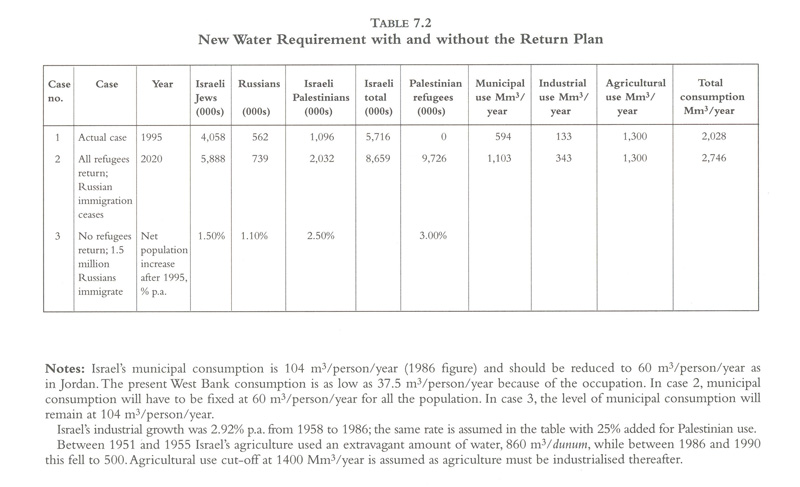
If agricultural consumption is maintained at 1,300 million cubic metres per year, two additional future scenarios emerge. In the first, all Palestinian refugees return, but Russian immigration ceases and municipal use is fixed at 60 cubic metres per person, per year for all the population. In the second scenario, no refugees return and an additional 1.5 million Russians emigrate to Israel, with Israeli municipal water use remaining at 104 cubic metres per person, per year. Both scenarios require roughly the same amount of water, about 2,700 million cubic metres per year, which is the maximum amount of water which may be extracted for Israel/Palestine from its territory and the immediately adjacent region.
The first of these scenarios would be feasible through regional agreement for water resource use. This would allow the refugees to return, although agricultural water use would have to be cut back to meet WHO standards of supply. Case 3 is not possible without a new war to acquire more Arab land and water and, at the same time, a policy of keeping the refugees away from their homes. The consequences of either allowing the refugees to return or admitting more Russians are therefore obvious. There are no water resources available at present for both cases. The second will not be politically acceptable to Israel’s neighbours, whose cooperation will be essential if Israel is to acquire access to sufficient water without renewed hostilities. A solution to the refugees’ problem will be vital if the coming water crisis is to be resolved, and Israel will therefore have to contemplate modifying its own immigration policies, particularly towards Russia. If, however, Israel continues to insist on the sole control of land and water and to plan for expansion (on the belligerent principle that water cannot be a consequence of peace while in fact it is a condition for peace),34 then true peace seems impossible to achieve. The key to any solution will be the unrestricted return of Palestinian refugees.
Return in Practice
The problems of the logistics of return are not insuperable. After all, between 1949 and 1951, Israel admitted over 650,000 Jews during a period of ongoing hostilities. In the 1990s, Israel admitted a similar number of Russian Jews without any noticeable disruption. The vast majority of Palestinian refugees, furthermore, are close at hand–in Lebanon, Syria and Jordan, or in Gaza and the West Bank. They know where to go; their village sites are mostly vacant. They know who they are; a typical village consists of four to five hamulas (extended families) which are still intact. Complete records of about 700,000 families and five million individual flies still exist, and the construction of new homes could be achieved in record time. UNRWA has a wealth of experience in this regard and is run by a Palestinian staff of 21,000. Thousands of qualified Palestinian workers, engineers and planners have similar experience. The task of reconstruction and rehabilitation is in principle quite manageable; for instance, the logistical exercise for Operation Desert Storm in 1990 ensured that half a million soldiers were moved, fed and housed in a matter of a few weeks.
Protection of Property Rights
To protect the property rights of refugees during the transitional period of refugee resettlement, it will be necessary to form a Palestine land authority (PLA).35 This will have a mandate to represent the property rights of Palestinians wherever they may be; to document, recover, hold, protect, maintain and develop Palestinian property and act as custodian of all Palestinian property, until individual owners are determined and property is returned to them. The PLA would be an independent authority, cooperating with the Palestine National Council (PNC) and relevant UN or other agencies, which should remain in existence until all its functions have been fulfilled. It would be democratically controlled by a general assembly to consist of approximately 1,500 members, representing 532 depopulated localities, at the rate of three persons per locality. These representatives could be elected or appointed from mukhtars, chief landowners and leading personalities. The total area of Palestinian land in question would be the sum of village and town lands, including common and public land minus land under Jewish ownership in 1948. The latter is very well-defined, as Zionist immigrants and corporations insisted on proof of land purchased or acquired in Palestine.
Initially, village land would be held collectively, through the PLA, in the form of shares assigned to each village. The areas of village lands are well-defined and the total land owned by each village is therefore indisputable. The village unit, with its monolithic, historical, cultural and blood-ties continuity, remains the best instrument for repatriation and rehabilitation. Individual ownership would then be assigned. The UN Conciliation Commission for Palestine (CCP) has 450,000 records of registered individual ownership. These records, however, represent only 5,194 square kilometres36 out of the total of 17,178 square kilometres of Palestinian refugee land. The balance was unregistered as a result of the hasty departure of the Mandate government, but its ownership was recognised. Custom and inheritance laws may be applied for these cases within the context of the village unit. The legal transfer of property held by Israeli bodies is straightforward. The 49-year land leases held by the kibbutzim are due to expire in 1998. The deeds can be transferred to the legal owners through the PLA by the Israeli Custodian of Absentee Property. The Israeli Development Authority will then become redundant and the Israel Land Administration should hand over the documentation. There should be no cases of dispute between individual Jews and Palestinians, since practically all Jews who have benefited from Palestinian land since 1948 have no personal title deeds.37 UNRWA would continue to function until all refugees were adequately and safely repatriated. UNRWA would then turn into a development authority under the United Nations Development Programme (UNDP). The return plan would be carried out under the guardianship of the CCP, which would ensure the physical and legal well-being of the returnees. All returning Palestinians would be issued with certificates of Palestinian Identity–converted from the present UNRWA refugee IDs, together with new certificates for about 1,241,000 (1994) refugees who are not registered- in addition to, and regardless of, any other citizenship (including Israeli) they may have. They would enjoy full civil and religious rights within Israel, although their political rights would depend on their country of citizenship. They would, however, have the right to obtain citizenship without discrimination on any grounds.
The Future
The proposed plan of return certainly runs counter to schemes of resettlement preferred by Israel. It is, however, in line with the rights and wishes of five million refugees whose voice is rarely heard. It is abundantly clear that, of the parties in the Arab-Israeli conflict, Palestinians are the only ones who have nowhere else to go, or that they wish to go, except to Palestine. Demographically, their return would cause minimal voluntary relocation of Israelis and no transfer of populations. It could be done, and would inevitably contribute towards permanent peace.
The Palestinians have no moral or legal obligation to accommodate Israelis at their own expense. By any standards, Israel has such an obligation–to correct the monumental injustice it has committed. Yet, the refugees’ return has no implications for Israel’s sovereignty. It has nothing to do with whether the Oslo Accords succeed or fail. It has nothing to do with settlements, boundaries, or even Jerusalem. The problems facing the proposal are, of course, clear. Israel will not allow it, at least at present, and can prevent it from taking place. Israel’s justification for this denial would be the need to protect its security and preserve its nature as a Jewish state.
However, Israeli Palestinians comprise 18 per cent of the population of Israel and 45 per cent of them are less than 20 years old, compared with 29 per cent of the Jewish population. This young community will eventually become a majority within the state if present trends continue–perhaps even within the next two decades. Israel would then have little choice but to accept them as full members of its polity, since subjugation or transfer would no longer be an internationally acceptable option. In that case, Israelis should, perhaps, face realicy and accept full partnership with Palestinians by allowing the refugees to return. It is the inevitable, democratic solution, even if it overturns the assumptions of Zionism which have ruled Israel for the past 50 years. Many Israelis themselves are already questioning the usefulness of Zionism in the fragmented mosaic that is Israel today.
Footnotes (↵ returns to text)
- Figures for Jews born in Palestine are estimated from the natural increase of those resident in Palestine in 1920. In 1995, 4,388,000 Jews lived in Israel alongside 1,011,000 Palestinians. A further 4,646,000 were the descendants of those originally expelled. Since 1980, Palestinians resident and exiled have outnumbered Israelis despite unrestricted immigration for the latter. For pre-1948 Jews and Palestinians, see A Survey of Palestine for the Anglo-American Committee of Inquiry (Washington DC: Institute for Palestine Studies, 1991) vol. 1, Chapter VI, p.140 and Appendix I, p. 841. For Palestinians in Israel/Palestine (67 per cent of the total), see J. Abu-Lughod, “The Demographic Transformation of Palestine” in Ibrahim Abu-Lughod (ed.), The Traniformation of Palestine (Evanston, Ill: Northwestern University Press, 1971), Table 3, p. 160. For post-1948 Israeli figures, see Statistic Abstracts of Israel, CBS, no. 46, 1995, Table-2.27 and others. ↵
- See Salman Abu Sitta, ‘The Right of Return, Sacred, Legal and Possible’ [in Arabic], Al-Mustaqbal al-Arabi, Beirut, vol. 9, no. 208, June 1996, pp. 4-38, for the Jist of the depopulated localities comprising 13 towns, 420 villages and 99 tribes. This list is based on Benny Morris, The Birth of the Palestinian Rifugee Problem 1947-1949 (Cambridge University Press, 1987) and W K.halidi, All that Remains: the Palestinian Villages Occupied and Depopulated by Israel in 1948 (Washington DC: Institute of Palestine Studies, reprint 1987) in addition to Beer Sheba Sub-District, the details of which have been published here for the first time. Population estimates for 1948 have been based on the village statistics of 1945. This paper also contains analysis of the depopulated villages, their population size and land area, when the inhabitants left and why they did so, together with the incidence of massacres. ↵
- See Sarni Hadawi, Palestiniar1 Rights and Losses in 1948 (London: Saqi Books, 1988) Appendix V, p. 224, Appendix VI, p. 230, Appendix VIII, p. 247; and Salman Abu-Sitta, ‘The Right of Return’, Table 3. Note that half of the Palestinian land owned by Palestinians who remained in Israel has been expropriated by the Israeli state, although its owners are Israeli citizens, the so-called “present absentees”. ↵
- See the well-known works by Morris (1987, 1990) for a new look at the now-declassified Israeli files. For the myth of Arab orders to leave, see W Khalidi, “Plan Dalet: Master Plan for the conquest of Palestine”, ]oumal of Palestine St11dies, vol. XVII, no. 1, Autumn 1988, pp. 3-70. For further discussion of Morris’s research, see Finkelstein. For a new review by Israeli authors of Israel’s responsibility, see Pappe, Segev, Flapan. For a review of UN archives, see Palumbo. For a database analysis of all depopulated villages, see Salman Abu Sitta. (Reference details of the above works arc given in the Bibliography.) ↵
- This analysis is an extension of Morris’s work in Birth of the Palestinian Rifugee Problem (1987) using the same criteria, to cover 532 localities. Sec Salman Abu Sitta, “The Right of Return”. ↵
- For a field survey of physical and cultural destruction of the Palestinian presence in Israel, see G. Falah, “The 1948 Israeli-Palestinian War and its Aftermath”, Annals of the Association if American Geographers, 86(2), 1996, pp. 256-85. ↵
- See for example, Don Peretz, who, in Palestinians, Rifugees and the Middle East Peace Process (Washington DC: US Institute of Peace Press, 1993), argues that the return is “neither feasible nor practical” (p.72) and that “conditions have so changed… ” (p.73), so as not to permit return. See also the comments by Elie San bar, the chief Palestinian delegate in the multilateral talks on refugees, who claims that the Palestinian delegation was given “the practical difficulties” as a pretext for no return (interview in Al-Hayat, London, 18 and 19 December 1996, p.18). ↵
- Original depopulated Palestinian towns Qatfa, Acre, Beer Sheba) have been left unrepaired since their Palestinian populations departed. Palestinians who remained in Israel have been prevented from maintaining or upgrading their own property, except by special permission, which is difficult to obtain. Israel destroyed most villages immediately after the expulsion of their inhabitants. In a field survey of 418 villages, Falah (“The 1948 Israeli-Palestinian War and its Aftermath”) found roughly 67.2 per cent of the villages involved were totally destroyed, 17.7 per cent partially destroyed, but 12.5 per cent partially habitable. ↵
- Palestine is a well-documented country. The first scientifically-prepared map was prepared by Jacotin in 1799, during Napoleon’s campaign. In 1872-7, the Palestine Exploration Fund surveyed Palestine and produced 26 sheets with 15,000 names (none of them Jewish) under 46 designations. The Government of Palestine (1920-48) produced maps of Palestine {1:100,000, 1:20,000, 1:12,500 down to 1:1,250 series). It also kept Land Registry records, from which the United Nations Conciliation Commission on Palestine produced the Landowners Index, available on microfilm. Israel used and updated the above maps for lease of land to the kibbutzim. Geographical Information System (GIS) can recreate past, present and forecast future conditions of land and people. ↵
- See Nur Masalha, Expulsion of the Palestinians: The Concept ofTrm1ifer in Zionist Political Thought, 1882-1948 (Washington DC: Institute of Palestine Studies, 1992) and A Land without a People: Israel, Tranifer and the Palestinians (London: Faber and Faber, 1997). ↵
- Sybilla Gratiana Thicknesse, Arab Rifugees: a Survey of Resettlement Possibilities (London and New York: Royal Institute of International Affairs, 1949) vol. viii, p.68. ↵
- See Elia Zureik, Palestinian Refugees and the Peace Process (Washington DC: Institute for Palestine Studies, 1996). ↵
- See his article in the International Herald Tribzme, 12 February 1997. ↵
- Donna Arzt’s report (see Bibliography) suggests a permanent solution for the Palestinian refugee problem, although it contains errors of fact. In the permanent “transfer” plan, Table 4.1, p. 88, Arzt quotes US Bureau estimates for the year 2005, cited in Peretz, p. 16, which omits Palestinians in Europe and the Americas. Yet Arzt conveniently halves the figure of”other Mideast States” to include “non-Mideast States”. Arzt’s table for 1995 is equally inaccurate. Furthermore, her tables for total Palestinians underestimate the figure by about one million persons (1995 estimate: 7,025,000 minimum-7,590,000 maximum). The substance of Arzt’s plan is to resettle the refugees mostly wherever they are, with transfer for 1,800,000 persons, half to Europe and the Americas and the other half to the West Bank. Most of the latter are “Displaced Persons” anyway. They would normally have returned, had Israel not kept the West Bank under occupation. Half of Gaza’s refugees will have to endure another transfer somewhere else while a negligible number will return to their homes in Israel if they satisfy the strict rules already in force since 1950. ↵
- These are: Tel Aviv, the Judean hills, Haifa, Petah Tiqwa, Sharon, Rishon Le Zion, Southern Sharon and Rehovot. The highest present population density is 6,711 (Tel Aviv) and the lowest 767 (Sharon) persons per square kilometre. ↵
- See, for example, Arnon Sofer, “Geography and Demography in Eretz-Israel 2000” [translated into Arabic]. Journal of Palestine Studies, no. 1, Winter 1990, pp. 117-35 and 126. Many others have lamented the concentration of Jews in such localised areas as a danger to Israel which should be solved by “transfer” (expulsion) of the Arabs (in Israel) to prevent them living in sparsely populated areas. Michael Romann argues that Jewish demographic patterns have put a limit on the ability to attain maximum territorial control of Arab land (Middle Eastern Studies, 26(3), July 1990, pp. 371-82). Recent information (The Sunday Times, 9 February 1997, p. 17) about a plan to build 40 islands offshore is an indication that the pattern of dense coastal urban settlement will continue. ↵
- These are: Lod, Hadera, Yizra’el, Nazareth, Kinerot (Tiberias). The highest present density is 883 (Nazareth) and the lowest 189 (Yizra’el) persons per square kilometre. ↵
- Ninety per cent of the returnees are to be distributed over the three most northern regions, Gerar, Besor and Be’er Sheva (Beer Sheba), and ten per cent in the remainder of Beer Sheba Sub-District. This is consistent with their residence patterns in 1948. ↵
- These are, in descending order of population, from a maximum of 30,000 to a minimum of 10,000: Umm al-Fahm, Bag’a al Gharbiyya, Judeida, Daliet al-Karmel, Tayibe, Tire, Tirat Karmel, Kafar Qasem, Kafar Qara, Arrabe, Ar’ara, Qalanswe, Rarnleh (mixed). (Israel Central Bureau of Statistics T.2.16.) ↵
- Yair Aharoni, The Israeli Economy: Dreams aud Realities (London: Routledge, 1991), p. 200. ↵
- Ibid., p. 134, Table 3.8. In 1989, employed persons in agriculture, forestry and fishing numbered just 69,000. ↵
- Ibid., pp. 208-13. ↵
- See Elisha Efrat, Geography and Politics in Israel since 1967 (London: Frank Cass, 1988) who discusses the t:1ilure in Negev at length (pp. 182-5). His figure for Beer Sheba bedouins is underestimated. ↵
- In the Southern District, those who entered and left respectively (in thousands) in the years indicated are: 1965: 22.6/20.6; 1970: 15.2/14.3; 1980: 15.5/16.9; 1990: 23.5/24.9 (Israel Central Bureau ofStatistics,T. 2.19.) ↵
- 1993 figures from Aharoni, The Israeli Economy, p. 200. Figures for 1993 are from The Statistical Abstract of Israel, T. 6-7 (1994). ↵
- Daniel Hillel, Rivers. ↵
- Ibid., p. 228; Efrat, Geography and Politics, p. 211. ↵
- See Dabbagh et al., “Desalination an Emergent Option” in Peter Rogers and Peter Lydon (eds.), Water in. the Arab World: Perspectives and Prog11oses (Harvard University Press, 1994), p. 228, Tables 3 and 4. ↵
- Miriam R. Lowi, Water and Power: The Politics if a Scarce Resource in the jordan River Basin (Cambridge University Press, 1993), p. 151. ↵
- See for example Davis et al., p. 40. ↵
- These figures are compiled from Lowi, Hillel, Davis, Kahhala, Eisa, Masri, Bakour and Kolars in Rogers and Lydon (eds.), Water in the Arab World, p. 131. ↵
- For the damage to and the illegal exploitation of the Occupied Territories’ water resources, see UN report, UNA/ AC. 183 (02) W21, p. 6, p. 66, respectively. This report also quotes claims, (p. 10) that Israel “controls more than 2,300 mcm [million cubic metres] of the Arab world water resources”. ↵
- The reduced figure of 60 m3/year (164 litres/day) is still larger than most Arab countries other than the Gulf. The reduction can be achieved by applying disciplined and serious policies of water economy, as was the case in Tunis which reduced its municipal consumption from 44 to 30m3/year. See Dabbagh et al., p. 5. None the less, WHO standards recommend levels above this. ↵
- This statement represents the Likud position given by Ploss and Rubenstein; quoted in Rogers and Lydon (eds.) Wclter in the Arab World, p. 60. ↵
- This idea is not without some precedent. The UN discussed in its early deliberations the appointment of “an administrator for refugee property”. See AI AC.25/W81 /Rev.2, p. 73. ↵
- Or 5,194,091 dunums (1 dunum = 1,000 sq. m) estimated as the registered individual Arab property in Israel (RP/1), excluding”unsettled title”, common and public Aran property and the whole of Beer Sheba Sub-District (12,577,000 d.). See the CCP land expert report by Jarvis, UN A/ AC.25/W.84, 28 April 1964. ↵
- After the conquest of Palestine in 1948, Israel passed a series of laws, described by Peretz as “a sort of legal fiction”. A Custodian of Absentee Property was appointed, who in turn transferred this property to a “Development Authority”. The latter was empowered to sell, buy, lease, develop or cultivate the absentees’ property, provided that such transactions are restricted to Jewish entities only. In pre-1948 Palestine, land held by the Jewish National Fund QNF) was declared to be “in the name of the Jewish People everywhere in perpetuity”. With the vast land gains acquired in 1948, a dispute arose between the JNF and Israel’s government about its control. The latter claimed that such land should be registered in its name as the reward for “the triumph of the Hagana and the flight of the Arabs”. It was finally agreed that the JNF would be allowed to increase its holdings and all Palestinian land be administered by the Israel Land Administration (ILA) according to JNF rules. The JNF stated in 1949 that, “of the entire area of the State of Israel [20,325 sq. km], about 300 sq. km are state domains. The JNF and private Jewish owners possess under 2,000 sq. km [1,682 sq. km]. Almost all the rest [i.e. 88 per cent] belongs in law [sicj to Arab owners, many of whom left the country… “All the Palestinian land is now run in custody by the ILA (until the owners return). For a comprehensive description of JNF activities, see Walter Lehn and Uri Davis, The Jewish National Fund (London: Kegan Paul International, 1988), particularly pp. 108, 114 and 132. ↵
Related Posts
PALESTINIAN REFLECTIONS ON ANTI-ZIONISM
The first Jewish anti-Zionist Congress took place in Vienna in mid-June of this year. I…
0 Comments6 Minutes
A Land Without a People…
Palestine is a land without a people,” so preached friends and foes in Europe in the…
0 Comments32 Minutes
The Right of Return is still the issue
Israel has never understood Palestinian resilience. We survived the Gaza Genocide, like…
0 Comments20 Minutes
Interview: “Not A Far-Off Goal” — Palestinian Scholar Salman Abu-Sitta on the Right of Return
Dr. Salman H. Abu-Sitta, a Palestinian academic, is renowned for his extensive work…
0 Comments38 Minutes
Building Future Palestine Competition
On 13 Sept 2024, the awards were announced in London for the 8th year Competition for the…
0 Comments2 Minutes

The Right of Return to Free Palestine
76 years later, Palestinian return to the homes and lands we were expelled from in 1948…
0 Comments12 Minutes

The right to return is sacred to us
FROM: MIDDLE EAST , JW SUPPLEMENT FROM MAY 15, 2024 “The right to return is sacred to……
0 Comments18 Minutes

The barbarians are back
Almost one thousand years ago, Pope Urban II exhorted European kings to wage a Crusaders…
0 Comments7 Minutes

RETURN PLAN 2023
Delivered at Palestine Writes PalFest, Thanks to Palestine Writes and the indefatigable…
0 Comments25 Minutes